Points clés de l'article :
- On 30 September 2026, the Gard and Hérault were placed on red alert for rain and flooding. Two more storms followed in October and November.
- According to Météo-France, the intensity of the heaviest daily rainfall rose by about 22% around the French Mediterranean between 1961 and 2015.
- Companies prepare with a business continuity plan. The SGDSN offers a free nine-step guide.
- This work falls to QHSE professionals. According to Apec, median pay for HSE executives is 54,000 euros gross per year.
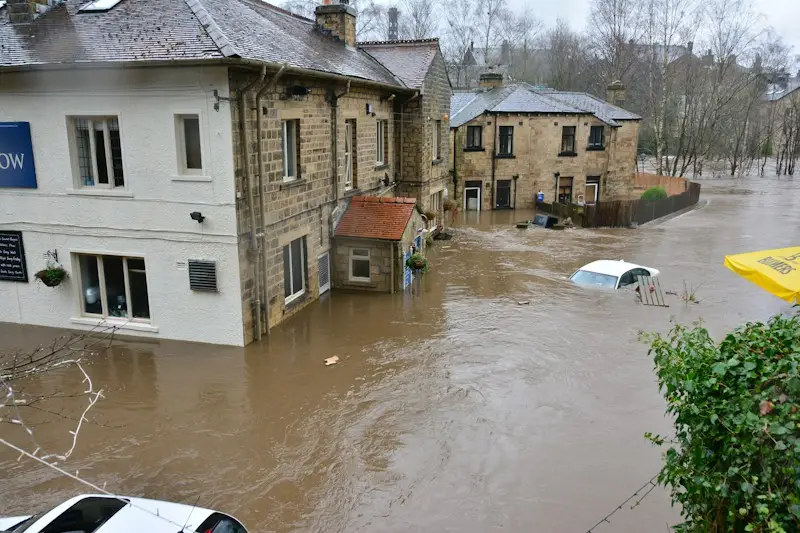
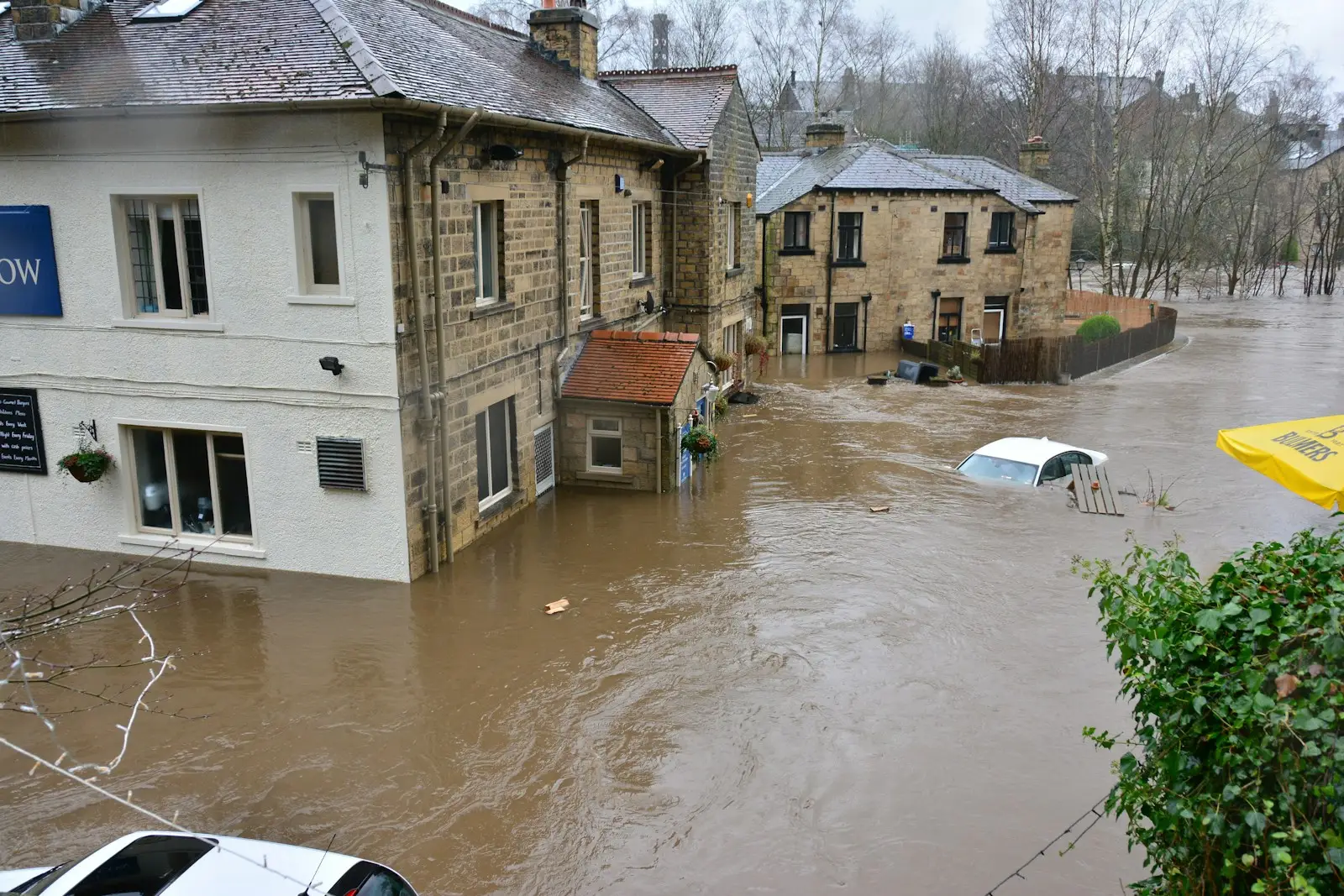
On 30 September 2026, at 7.30 am, every mobile phone in the Gard department went off with the same message: "FR-Alert: extremely serious alert." The prefecture had never used the system before to warn the public of an imminent threat (Le Monde, 1 October 2026). Thirty minutes later, Météo-France put the Gard and Hérault on red alert for heavy rain and flash flooding. Red is the highest level the weather service can issue. It called the storm "remarkable, even exceptional".
In Saint-Hippolyte-du-Fort, at the foot of the Cévennes, 328 mm of rain fell in a few hours. That is roughly a quarter of what the town gets in a year.
The Jallatte factory sits in that same town. It makes protective footwear and employs 75 people. On 30 September it shut for the day, the regional business paper La Lettre M reported on 1 October 2026. Workers who had already arrived were sent home. Office staff and the managing director worked from home. The factory knows floods: water got in back in 2014, and flood barriers now keep it out of the buildings. "In this kind of situation, safety comes first," says Jean-Marie Calame, the managing director.
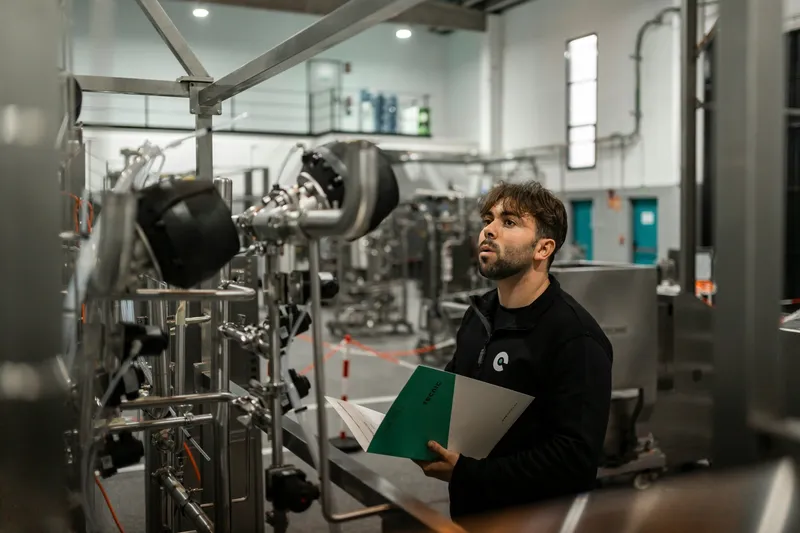
Jallatte was running a business continuity plan. In most companies, the QHSE manager (quality, health, safety and environment) writes that plan, tests it and trains the teams on it. Autumn 2026 showed why the job matters.
Three storms in six weeks
The storm of the 30th September in the Gard was not the last and only storm of the autumn. Another storm occurred on the 20th October 2026 in Saint-Mitre-les-Remparts (near Marseille), causing the death of one person. Four months' worth of rain fell in just 24 hours. Météo-France recorded over 500 mm of rain in Solenzara, in Upper Corsica. By the end of October there were 4 deaths and 1 person missing in the Bouches-du-Rhône, Corsica and the Var due to these storms.
Further orange alerts were issued on the 5th November to the Gard, Hérault and Corsica. In Southern Corsica, a car was washed away by the flooding. This resulted in the death of 2 people (Le Monde, 6th November 2026).
Following the 19th and 20th October storms, businesses were hit hard and had only 30 days to declare damages to their insurer. The government issued a decree in the Journal officiel (France's official gazette) on the 29th October 2026 declaring the event a natural disaster, as the town of Uzès (one of the communes impacted) reminds them.
More intense storms
Storms have caused damage to towns in the Mediterranean before, such as Nîmes (1988) and the Gard (2002). However, Météo-France found that the most intense rainfall in a day increased by around 22% in the French Mediterranean between 1961 and 2015. Furthermore, Météo-France estimates that the number of days with over 200 mm of rainfall has doubled. As Philippe Drobinski, climatologist and research director at the CNRS, said in Le Monde on the 30th September 2026: "Warm air holds more water molecules than colder air. So when it rains, it rains harder." In late September the Mediterranean was 2-5 °C warmer than usual (Météo-France).
However, having preparation in place can help. Nîmes set up stormwater channels after the 1988 floods, so that the city won't flood with around 250 mm of rain falling (Luc Marragou, head of major risk management, Le Monde). The city came through with little damage on the 30th September 2026. "We are collectively much better prepared, but with climate disruption, we are preparing for very large-scale events that can happen at any time," (Lieutenant-Colonel Max Charreyron, Gard fire service, Le Monde). This also applies to a company.
Business continuity plan
A business continuity plan is a plan to ensure that a company can continue operating, or quickly resume operations, following a disruption such as flooding, fires, cyber attacks or pandemics (Entreprendre Service-Public, French government business portal). On the 20th April 2026, Entreprendre Service-Public posted a free guide to creating a plan. The guide is provided by the SGDSN (French General Secretariat for Defence and National Security) and outlines 9 steps to follow.
For a business in a flood zone:
Check whether you are vulnerable to flooding using your local flood risk prevention plan. List the critical processes which cannot stop for longer than a few days. Identify dependencies such as stock, servers and sole suppliers.
Try to protect anything that you can. This could be raising your stock and electrical cabinets, or installing flood barriers like Jallatte.
Identify who will make the decision to shut down, how you will inform your employees and who will work from home.
Review your insurance policy. Pay attention to your business interruption clause. This is what pays out when your factory is closed.
Test your plan at least once a year. This helps identify any gaps and ensures everyone knows their role.
Risk identification and recommendations are part of the Bachelor 3 QHSE & CSR course at Klima School. Real companies are used for practice.
Shutting down costs money. After the wildfires in summer 2026, around 1,800 businesses, professionals and local authorities made claims for business interruption. These totalled nearly 30 million euros (France Assureurs, French insurance federation, Public Sénat, 31st August 2026).
QHSE departments already have 2 duties that are similar. Employers must carry out an assessment of risks to health and safety and record these in the DUERP (single risk assessment document), under the French Labour Code. The new ISO 9001 standard (published September 2026) asks certified companies to plan for business continuity (see our article on what's new in ISO 9001:2026).
QHSE careers
In a smaller company, the QHSE manager would usually be responsible for creating the plan, testing it and training staff on it. In larger groups this will be shared with the HSE manager, risk manager or business continuity manager.
The QHSE director and sustainability director roles fall under health, safety and environment at Apec (French association for executive employment). The median salary for this family of roles is 54,000 euros gross per annum. Under 35 years old, the median drops to 44,000 euros (Apec 2025 study, Les rémunérations des cadres dans 111 familles de métiers).
Risk management training at a QHSE school
At a QHSE school such as Klima School, these topics are covered in the Bachelor 3 Sustainable Business Strategy, QHSE & CSR.
This is a 1-year course after 2 years of higher education. Students learn how to analyse and prevent industrial, chemical and environmental risks. They also learn about monitoring regulations and carrying out a mock audit for ISO 9001, 14001 and 45001.
This gives the student a French state-registered RNCP level 6 title (39599), Responsable de projet qualité sécurité environnement et développement durable.
The Mastère Sustainable Business Strategy, QHSE & CSR follows on from the bachelor and lasts 2 years. This gives the student an RNCP level 7 title (37769), Manager de la RSE et du développement durable.
These courses are offered both as an apprenticeship (4 days in company and 1 day in school) or as full time. As an apprentice, you will be paid a salary. The cost of the course is paid for by the company's skills operator (OPCO).
You apply online and attend an interview. The classes take place in Nanterre (west of Paris) or online. Courses start in September and January.
See our article on COP31 and CSR careers for the climate side.
Floods & business continuity FAQs
Do companies need a business continuity plan? There is no general rule that companies need to create a plan. However, if there is no plan in place, a disaster can cause human and financial loss (Entreprendre Service-Public). Employers must still carry out a risk assessment to identify risks to employees and record it in the DUERP (single risk assessment document).
What should a company do after a flood to claim compensation? If the commune is declared a ‘natural disaster’ area by an order in the Journal officiel, the business has 30 days to declare damages to its insurer. It will only be compensated for lost business if it has business interruption cover in its contract.
What role deals with climate risks in a company? Usually the QHSE or HSE manager. Sometimes the risk manager or business continuity manager in larger groups. The Bachelor 3 and Mastère at Klima School (QHSE school in Nanterre) will prepare you for these roles. The courses are offered as an apprenticeship or full time.
You can download the brochure for the Bachelor and Mastère to compare the courses, or book a call with an adviser.