Points clés de l'article :
- Concern among the French regarding environmental issues is growing. Today, 86% of French people say they are aware of the effects of climate change.
- Despite these high levels of concern about climate change and the environment, people report feeling ill-equipped and lacking knowledge regarding the best practices to adopt, whether in the workplace or as individuals.
- Eco-anxiety paralyzes a portion of the French population, keeping them in a state of inaction due to a lack of training that would enable them to take action.
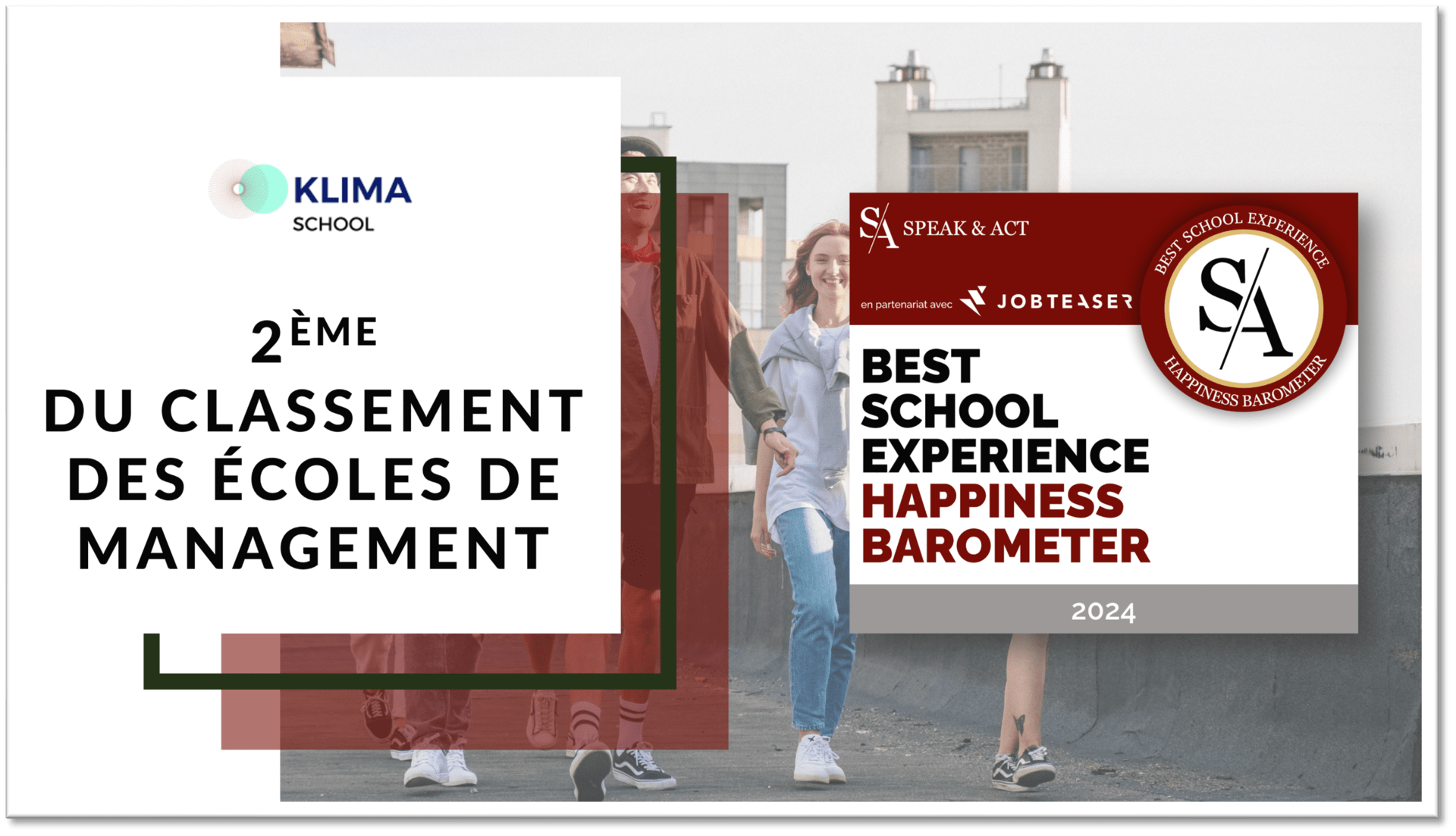
- The business school Klima School offers students a dual curriculum in management and climate change issues. The goal: to learn how to decarbonize the economy through the study of concrete case studies.
- The consulting firm Greendeed supports companies in their CSR strategy and evaluates the ecological commitment of their employees.
Concern among the French regarding environmental issues is growing. Today, 86% of French people say they are aware of the effects of climate change.
The state of the planet has become a major source of concern for the French, across all generations. An IPSOS study conducted in March 2022 shows that 80% of French people are concerned about climate change and environmental protection. Another BVA survey highlights that 86% of French people are now aware of the consequences of climate change, likely due to the long months of drought and the summer heatwaves exceeding 40 degrees that France experienced. Furthermore, they acknowledge that humanity is the cause of this climate change and are well aware of the gravity of the situation.
It is therefore legitimate to question why the situation continues to worsen. One might wonder why the French population does not react, despite being aware of the problem, and why they do not take the opportunity to commit to its resolution. Many factors explain this climate inaction, starting with a lack of information and understanding of the issues, which contributes to feelings of eco-anxiety or climate anxiety.
Despite these high levels of concern about climate change and the environment, people report feeling ill-equipped and lacking knowledge regarding the best practices to adopt, whether in the workplace or as individuals.
Indeed, while the French are increasingly worried about the environment and the climate, a significant lack of basic knowledge remains. Climate science is a subject that requires short training—around twenty hours—to understand the scale of the issues at stake. For example, many fellow citizens are unaware that the consequences are not linear. Thus, the consequences of 2 degrees of warming may be a thousand times more severe than those of the current 1.3 degrees, and at 3 degrees, perhaps a hundred thousand times worse. A large part of the population therefore lacks sufficient knowledge about energy and climate to effectively impact the planet through their individual or collective actions. And there is still a long way to go; according to a study conducted by the International Climate Observatory and EDF, only a meager 10% of French people currently claim to know exactly how to fight climate change at their own level.
"At every climate workshop, we observe a lack of knowledge and mastery of the scale of climate change issues" - Romane Janecki - work-study student at Greendeed as Development Manager and Climate Fresk facilitator.
How can we find solutions to the constrained optimization problem that is climate change if we do not master the fundamentals? A Climate Fresk facilitator, Romane Janecki, a work-study business school student trained in climate issues, testifies: "At every climate workshop, we are always confronted with a lack of knowledge, concepts, and mastery of the scale of global warming." This lack of information sometimes leads the public to believe their "ecological" actions have a real impact, when in fact their actions lead to only a small reduction in greenhouse gas emissions. As Joseph Hermet, director of Klima School, explains: "At student fairs, when we ask about climate change, people answer that they sort their waste. But if they knew that sorting waste only reduces CO2 emissions by 3 kg/person/year, whereas reducing meat in one's diet avoids 450 kg of CO2/year, their actions would be different." And this observation is reflected in the figures; for instance, a partner at the consulting firm AT Kearney demonstrates in a survey reducing plastic packaging or sorting waste is seen as the primary way to reduce one's personal carbon footprint (22%), ahead of the option of reducing annual air travel by one flight per year (18%). A profound lack of knowledge therefore persists.
Eco-anxiety paralyzes a portion of the French population, keeping them in a state of inaction due to a lack of training that would enable them to take action.
Eco-anxiety is also a potential barrier to action, as fear is a well-known phenomenon that can hinder movement. This is due to various causes: some do not want to delve deeper for fear of then having to enter a state of denial; others do so because the consequences of their training would directly conflict with their personal interests, and they fear having to change their lifestyle and their perception of personal success. Nevertheless, awareness is emerging within families, and younger generations, less trapped by the vested interests built by their predecessors, sometimes challenge their parents on the subject of the climate.
In any case, the conclusion to be drawn is clear: it is necessary to educate the population on climate issues and help them develop the skills needed to take action in favor of decarbonization. To achieve this goal, it is essential to train students by making it possible to join a business or engineering school that integrates climate issues from the very beginning of the curriculum, such as Klima School, which trains and enables younger generations to be quickly operational in driving decarbonization. Furthermore, to have an immediate impact on the climate through the actions of decision-makers, it is necessary to train business leaders and employees through specialized firms such as Greendeeed, which aim to advise, train, and offer activities centered on sustainable development and CSR. We can imagine that by the end of these training programs aimed at the entire working population (current and future employees), everyone will be able to benefit from the skills needed to move companies and organizations toward a decarbonized economy that is more energy- and resource-efficient and more respectful of the precious climate balance that makes our planet habitable.
The business school Klima School offers students who wish to train a dual curriculum in management and climate change issues. The goal: to learn how to decarbonize the economy through the completion of concrete case studies.
Understanding climate issues and training in subjects that allow one to join companies to take action are increasingly urgent demands from younger generations, just as students at top business schools want climate training and complain about the lack of space given to the climate in their education. The youngest, who were not yet old enough to voice their fears, are also mobilized today following the fires of the summer of 2022 and the year of drought. They are expressing their dissatisfaction and demanding more training on climate change issues in order to hope to cope. Similarly, companies increasingly need personnel who are immediately available to take charge of implementing their climate strategy, redesigning their product ranges, and partially or completely modifying their business models, with the goal of operationally reducing their carbon emissions. The demand is growing stronger.
Klima School offers dual expertise in management and climate change issues.
This is why the sector of climate action within companies requires more and more trained personnel, which led the team at Klima School to create a school dedicated to the challenges of decarbonizing the economy. The programs at this new business school offer dual instruction, focused both on business fundamentals and on action in favor of the climate. Klima School offers training from the first to the fifth year of higher education, certified by RNCP titles. The courses allow for a rethinking of the economy and the way traditional management courses are taught.
Today, carbon emissions and physical limits—which are orthogonal to the idea of unlimited growth—are taken into account. Carbon footprint courses, climate strategy design, case studies on eco-design or low-carbon product innovation: all these new subjects are part of the management program of the climate change business school. Too many students still lack guidance toward career paths that allow for the decarbonization of the economy. Unfortunately, although more aware and informed than their elders regarding the climate future that awaits them, many students remain ignorant of the main concepts to understand before hoping to address the problem: energy, fossil fuels, climate change, renewable energy, nuclear energy. Yet, CSR and careers focused on climate and environmental impact provide a real sense of the common good and support younger generations in usefully coping with the growing feeling of eco-anxiety.
Klima School, a business school where practice is king
At Klima School, students can acquire the foundations of management, such as courses in business strategy, or the basics of law or marketing. They are also trained in all subjects that allow them to understand and act for the climate. This includes courses on scope 1, 2, and 3 carbon footprints, responsible purchasing, recycled raw materials, an introduction to environmental law, green taxonomy, green digital, and responsible marketing.
Furthermore, the teaching at this business school is based on case studies and is not theoretical. The speakers and professors are all professionals in their sector, whose roadmap is to provide concrete examples to students. Each course presents a theme within a global program. The professors therefore present a unique case that can then be applied by the students. The goal is twofold: the application of knowledge allows for faster assimilation, and it allows students to build a portfolio of skills that can be presented to recruiters in high demand.
The consulting firm Greendeed supports companies in their CSR strategy and evaluates the ecological commitment of their employees.
B2B training: building a CSR strategy in collaboration with companies
The climate and ecological emergency is making companies increasingly aware of their role in limiting environmental impacts and the associated damage. Their employees, bolstered by the growing awareness among the French population, are also increasingly concerned and conscious of the issues at stake. They are placing more and more importance on their employer's CSR actions. However, while companies and their employees want to take action, they do not always know how to assess their impact or how to prioritize the actions to be implemented.
However, if you lack the internal expertise, it is always possible to call upon a specialized CSR consultancy, such as Greendeed. Greendeed is an agency that supports companies in developing their CSR strategy and implementing it operationally, with the goal of reducing their environmental impact. From auditing and consulting to monitoring, training, and facilitation, Greendeed offers a 360-degree approach, allowing you to start from the development of your CSR strategy all the way to its concrete implementation for all stakeholders.
Greendeed: A new way to measure employee ecological engagement
The Greendeed agency is stepping up its service offering, as it now provides a barometer to assess employees' level of knowledge regarding environmental and climate issues. This allows for tailored advice for each organization based on its specific needs. The goal is to enable employee involvement in the transition to ensure comprehensive action against climate change.
Corporate seminars, team building, and eco-friendly goodies to promote your climate-energy-CSR strategy.
Thanks to Greendeed, companies can choose from a wide range of activities to convey their CSR message in a fun, educational, and engaging way. The objective remains to raise employee awareness about ecology and make it easy for everyone to understand the best practices to adopt for the office and at home. By combining sports and CSR in its sustainable development quiz bootcamps, or by offering introductions to sustainable agricultural practices, focusing on plants and biodiversity, or crafts, or even culinary activities featuring edible wild plants, the goal is to sensitize company employees to more responsible ecological practices (zero waste, anti-food waste cooking, permaculture vegetable gardens) with the aim of driving behavioral changes regarding the environment and the climate.