Points clés de l'article :
- Current status: the fashion industry emits as much CO2 as a G7 country.
- Abundant energy keeps the fashion industry locked into a linear model focused on production, use, and disposal—a model that is efficient in terms of costs and pricing, but not for the environment or the climate.
- The fashion industry is suffering from an energy rebound effect: despite abundant, cheap energy and the rise of digitalization enabling the second-hand market, the utilization rate of clothing continues to decline.
- A glimmer of hope: new processes to reduce the fashion industry's carbon impact on the climate, and manufacturers who are beginning to take action.
- Recycling fabric scraps and upcycling: new methods of restraint to reduce the climate impact of the clothing industry.
- Reducing production without sacrificing value: new impact-driven business models in the fashion and clothing industry.
Current status: the fashion industry emits as much CO2 as a G7 country.
According to a study by the consulting firm Quantis (acquired by BCG), the fashion industry, from upstream (fabric and garment production) to downstream (transport, distribution), accounts for approximately 8% of global greenhouse gas emissions in 2016, which is equivalent to the annual emissions of a country like France (approximately 4 million tons of CO2 equivalent). Another way to understand the scale is to note that the fashion industry accounts for the combined annual emissions of global air and maritime transport.
One might think that transport and e-commerce distribution carry the most weight in fashion's carbon footprint, but that is not the case. In reality, the majority of the impact comes from the upstream production stages. In fact, two seemingly simple steps—yarn preparation and dyeing or bleaching—account for 28% and 36% of the sector's total carbon equivalent emissions, respectively. This is due to the energy intensity required for each. For dyeing, for example, it is necessary to raise temperatures and perform the dyeing or bleaching process using heat.
This heating often requires the use of primary fossil fuels that emit carbon, or non-decarbonized electricity. Producing countries such as India, China, and Bangladesh concentrate a large portion of global production capacity and still have an energy mix that is too heavily dependent on coal or natural gas as a primary energy source or for electricity generation.
Abundant energy keeps the fashion industry locked into a linear model focused on production, use, and disposal—a model that is efficient in terms of costs and pricing, but not for the environment or the climate.
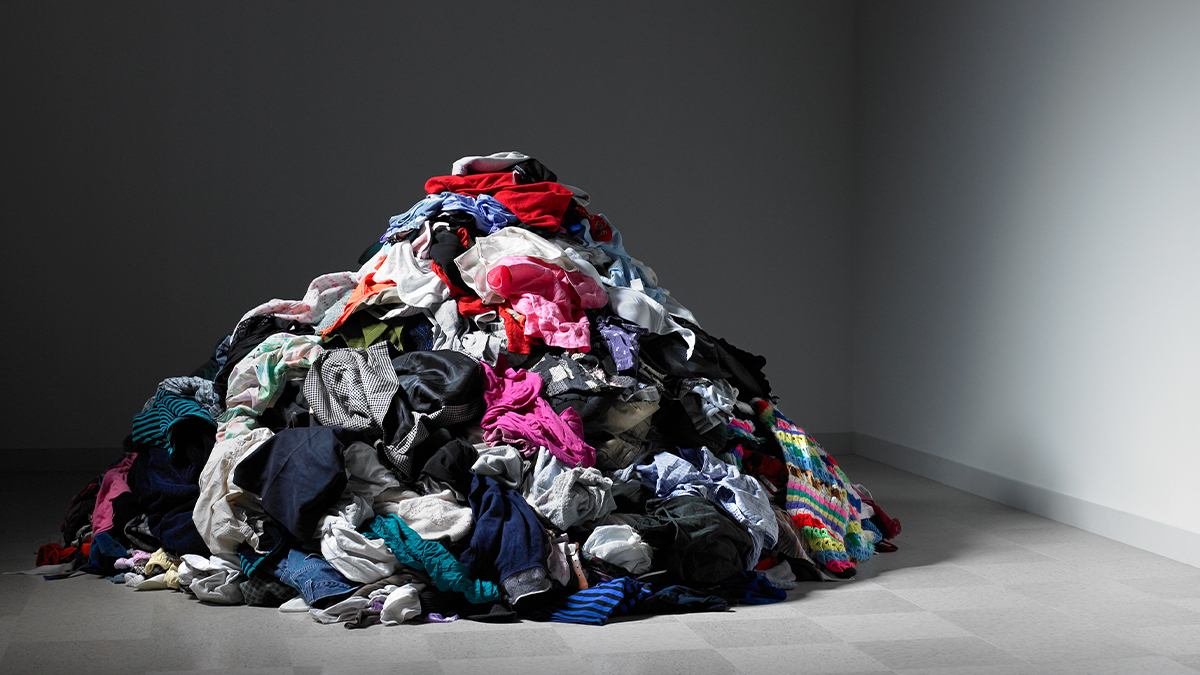
The fashion industry operates on an almost exclusively linear model: non-renewable resources and raw materials are extracted to produce clothing that is used for a very short period, after which it is mostly sent to landfills or incinerated. Furthermore, this current model of clothing production encourages overconsumption due to the low costs of raw materials and labor. These low current costs are a direct result of abundant access to fossil fuels (coal, oil, gas) in the upstream manufacturing and transport processes, making the reuse of materials economically irrelevant. As a result, only 1% of materials used to produce clothing are recycled to produce new garments. Along the same lines, according to the brand Azala which produces upcycled children's clothing lines, fabrics are lost during the manufacturing process, amounting to a loss of 60 billion square meters of fabric discarded every year before even being worn (or about 15% to 20% of all fabric produced). This abnormally high loss rate demonstrates that the process can be improved if economic actors make decisions based on factors beyond just price—a situation that could change in the event of future restrictions on energy supply. Thus, responsible buyers or responsible supply chain managers will have a role to play in adjusting their supplier and material selection criteria, increasingly accounting for the negative externalities of industrial garment production, such as energy costs, CO2 emissions, and other pollutants.
"60 billion square meters of fabric are discarded every year before even being worn" - Sofiane Bouhali - CEO, Azala.
The fashion industry is suffering from an energy rebound effect: despite abundant, cheap energy and the digitalization that has enabled the second-hand market, the utilization rate of clothing continues to decline.
Access to cheap primary energy in producing countries and the massification of production in those regions have significantly reduced production costs and, consequently, retail prices. But while the share of household budgets spent on clothing has been falling steadily since 1960, dropping from 9% in 1960 to 3% in 2015 (author's calculation), it has not fully reflected these price drops. Furthermore, while consumers do indeed see a percentage cost reduction in their monthly budgets, overall volumes have continued to rise. This is illustrated in the chart below. In other words, instead of buying the same t-shirt for less between 2000 and 2015, people tend to buy two cheaper ones while still reducing the share of clothing in their budget. This phenomenon leads to lower utilization per item sold and skyrocketing greenhouse gas emissions.
We also observe that during waves of digitalization, the arrival of exchange platforms like eBay in the 2000s, Leboncoin in 2010, or Vinted in 2020 has done nothing to change this trend of increasing production and sales volumes. Here again, access to more clothing with just a few clicks, while seemingly attractive in terms of price and second-hand life, only contributes to an overall rise in consumed volumes. Indeed, according to a study by the Boston Consulting Group, 70% of platform users resell items second-hand to increase their purchasing power for new goods, despite the CSR aspect of the second-hand shopping approach..
A glimmer of hope: new processes to reduce the fashion industry's carbon impact on the climate, and manufacturers who are beginning to take action.
Faced with this reality, manufacturers and producers are trying to innovate, often under pressure from clients committed to decarbonizing their activities. These clients start with the most technically and budget-accessible measures but are unwilling to sacrifice quality or production costs. Optimization under constraints and implementation at an industrial scale is therefore complex in most cases. Nevertheless, solutions are being found; for example, for the most polluting stage—dyeing or bleaching—Decathlon teams, in partnership with their Asian suppliers, have developed a cold-dyeing process that eliminates the need for high temperatures.
To this end, Decathlon has appointed a supply chain manager in charge of new processes and low-carbon purchasing. A new career for the future. Another very concrete example at the dyeing stage: for the production of the grey inner lining of a green down jacket, an innovative process allows for the blending of mass-dyed black yarn with undyed yarn. Compared to conventional dyeing, this process reduces carbon emissions by 40% and fine particle (PM 2.5 ppm) emissions by 66%.
Recycling and recovery of scraps and used clothing: new, sustainable methods to limit the impact of fashion and clothing on the climate.
Innovations to reduce the carbon impact of fashion are diverse and cover every stage of the value chain from yarn manufacturing to finished garments: spinning, weaving, manufacturing, distribution, and recycling. As mentioned above, the reuse of materials from our clothing is at the heart of environmental and climate concerns. Indeed, the manufacturing and processing of raw materials account for nearly 80% of the average carbon footprint of clothing. Thus, developing fabrics from existing materials can profoundly and positively change the industry's results in terms of carbon emissions. Upcycling is the process of converting used clothing or workshop cutting scraps into new pieces of apparel. This process has the benefit of impacting all stages of the life cycle of the produced garments: it shifts a portion of raw material production and allows for the relocation of some production to areas where electricity is less CO2-intensive. It also improves the utilization rate of the produced raw material by optimizing the amount or weight of material used per garment produced.
Reducing production without sacrificing value: new impact-driven business models in the fashion and clothing industry.
Despite the innovations brought to the value chain to improve production processes, given the weight of the clothing sector in carbon emissions and the reduction targets required to keep climate change at livable levels (see IPCC emission scenarios), a reduction in clothing consumption is inevitable. A significant portion of our clothing is worn fewer than 10 times before being thrown away, donated, lost, or resold. This sub-optimization of produced resources prompts us to think about how to extend this metric and return to more reasoned wardrobes. From the perspective of the in-store buyer, the solution lies in purchasing behavior focused on increased quality and better product durability, while leveraging the circularity of clothing through second-hand sites or donations.
From the perspective of manufacturers and retailers, paths are emerging to develop more virtuous business models (with the caveat that they do not lead to increased purchases of new clothing via the rebound effect generated by the savings made): pre-ordering, subscription and clothing rental, resale of seconds, recycling/upcycling, etc. All these methods help reduce the unit carbon impact, and potentially the global impact if the freed-up budgets are reallocated. This focus on product durability represents a new opportunity for brands and industrial subcontractors, who can then gain a competitive advantage to communicate to the end customer—and perhaps even reflect this in their pricing.
The fashion and apparel industry must transform its business model
The fashion industry will need to transform itself to meet climate challenges. While the industry's carbon footprint is significant, there are many methods and opportunities for energy efficiency and material improvements that can reduce the greenhouse gas emissions it generates. Consequently, it is necessary to evaluate clothing based on its resource consumption and negative externalities, rather than purely economic considerations.
For consumers, a product's environmental impact is starting to become a purchasing factor. However, to remain competitive in a globalized world, it seems necessary for public authorities to support this trend by accounting for imported greenhouse gas emissions in product taxation, so as to reflect a fair price regarding global, cross-border ecological considerations. Furthermore, in addition to the industry's carbon footprint, methods aimed at producing fewer raw materials will make it possible to limit the destruction of biodiversity caused by clothing manufacturing (micro-particles, polluted water, deforestation, etc.).